

Retrofit - Heating, Insulation & Solar
Heating and hot water for UK buildings make up 40% of our energy consumption and 20% of our greenhouse gas emissions. So fixing our leaky homes with improved insulation and moisture control, and moving away from gas boilers to use heat pumps, is one of the biggest steps we can take to reduce our carbon footprint. We can also now benefit from home-produced energy using Solar PV (Photovoltaic) panels on our roofs.
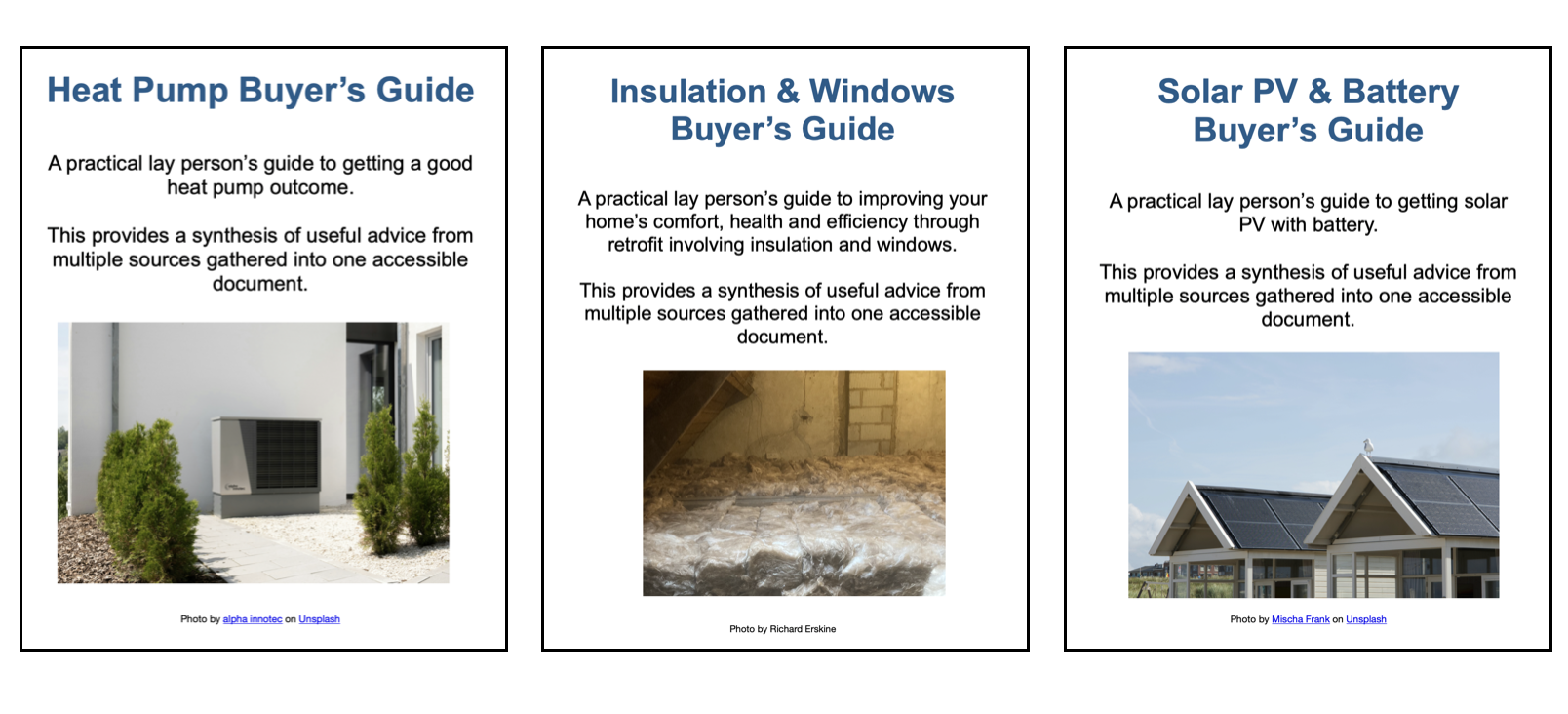
We have produced practical lay person’s guides. These provide a synthesis of useful advice from multiple sources gathered into accessible document guides (press each button below to go to the desired guide).

Why ‘Fabric First’ mantra needs to be qualified
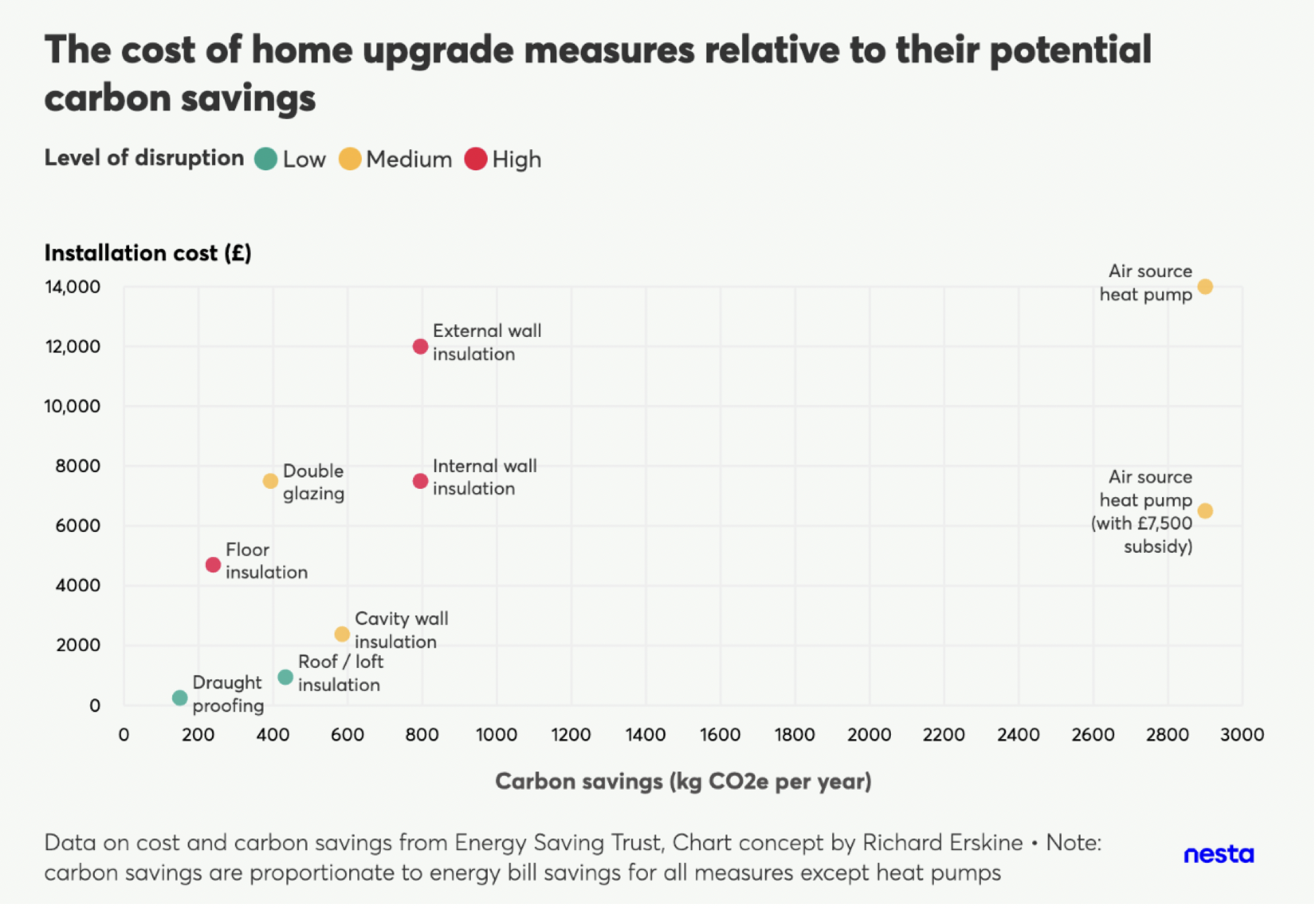
FIGURE - from a January 2024 Nesta report using Energy Saving Trust estimates of capital costs and annual carbon saving for different retrofit measures (the original source of this figure was from an essay ‘Are Air Source Heat Pumps (ASHPs) a Silver Bullet?’, Richard Erskine, 17th January 2021)
What this clearly shows is that a heat pump out-performs all other measures in terms of carbon savings (and this only gets better as the grid progressively gets greener). The ‘fabric’ measures if all done can match a heat pump on carbon savings but at about 4 times the cost.
Pragmatic Approach
We therefore recommend a pragmatic approach, dealing with critical fabric measures to deal with health and comfort, but ensuring there is enough in the budget to get a heat pump. The mantra ‘fabric first’ can lead to ‘fabric only’, which is not a good outcome, whether you are concerned with bills, comfort or the planet..
The benefits of solar, especially when combined with a battery, are now so compelling and within reach of many householders.
Disconnecting from Gas Network
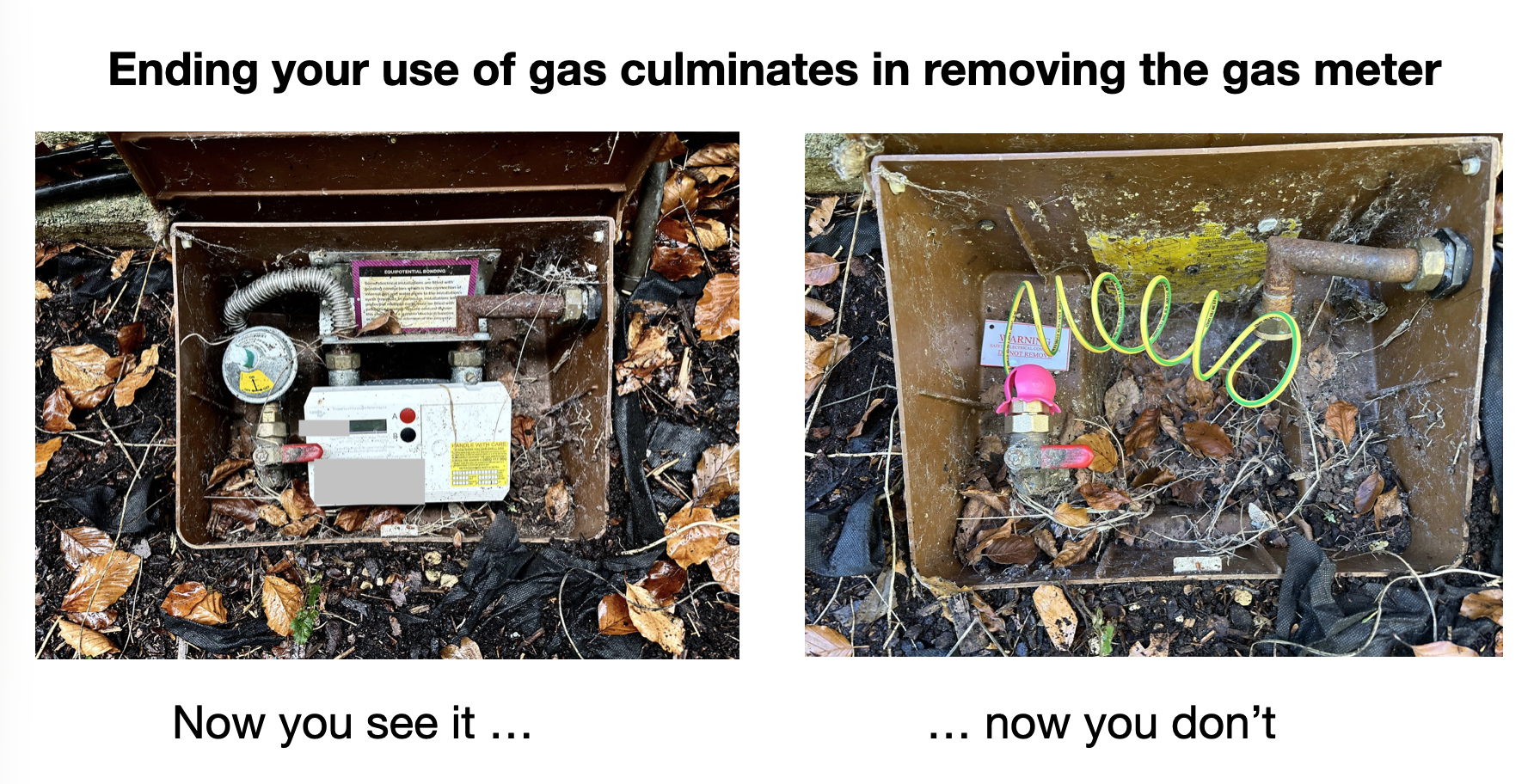
To fully remove the need for gas being burned in your home, it’s worth considering an induction hob, which has the benefit of improving air quality in the kitchen, as well as leading to the day you can disconnect from the gas network.

Simple things you can do
When your light bulbs next need changing, switch to LEDs.
When you next need to change a fridge or other device, choose the most efficient you can afford.
Think about ways to not waste water such as shorter showers.
Check your thermostat and timer and utility bills to understand how much energy you are using.
Try turning the thermostat down by 1⁰C and see if anyone notices? (but don’t go cold in winter - stay comfortable).
That small 0.5kW electric heater in the damp corner left on for long periods can consume a lot of electricity.
Are there some draughts that are easy to fix? Try draught excluders or other solutions for doors and windows.
Use a water butt to store water for use in the garden during droughts.
Are there ways to reduce water run-off around buildings you live or work in, to help reduce town flooding.
